

Digital Learning & Mobile Phones
Today’s students are ‘digital natives’; they have grown up surrounded by technology and they instinctively know how to use it and gravitate towards it. As ‘digital immigrants’ who have adapted to using technology later in life, adults often see it as a distraction from learning or as a gimmick rather than a learning tool. At Dr Challoner’s Grammar School we see it as part of our job to help overcome this perception. Digital technology and the internet provide infinite possibilities for learning and the skills that students develop during their time at school will provide the basis for using it in the real world effectively and efficiently. With this in mind, we have developed a Digital Learning project which aims to empower both students and teachers.
From September 2026, incoming Year 7 students will not be permitted to bring smartphones or smartwatches to school. This policy change is in response to increasing evidence of the risks these devices pose to young people and is designed to enhance student safety, encourage more face-to-face interactions, and to enable a dedicated focus on learning at school. Students will be permitted to bring a non-internet-enabled ‘brick’ phone with them, but they will be required to keep this switched off in their locker for the duration of the school day.
This policy change has widespread support amongst our current parent body. In a survey in 2026, over 80% of parents were strongly supportive of a ban on smartphones for new students. By adopting this collective approach across local schools, we hope to remove the social pressure on students to own a smartphone and to support parents in making decisions about when is the right time to provide their child with a device. We will review this approach each year, and we anticipate that this policy will move up the school each year.
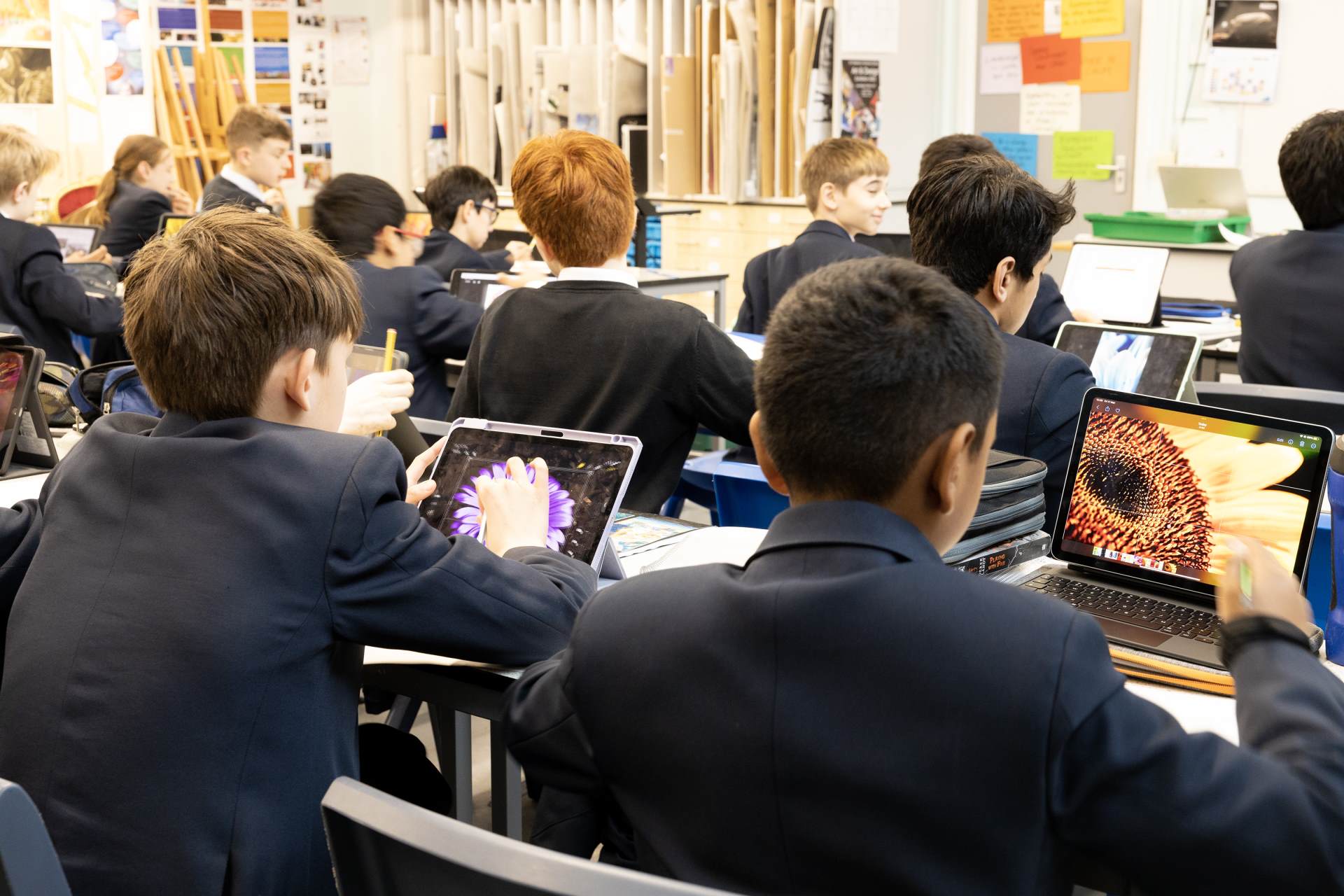
Starting in the second term of Year 7, students bring in their own devices - a Chromebook - to access enhanced learning opportunities through digital resources. They use them in a variety of ways both in class and at home in order to enhance their learning, for example, live internet research in class and mind mapping apps at home. Google Drive and Google Classroom are used to set and complete classwork and homework. This allows for a much more personalised learning experience. The safety and security aspects of these devices have not been overlooked. Students are required to download a monitoring app and we have robust filtering in place, both of which help to protect students' online activities. The school has incorporated a detailed online safety element into PSHE lessons and we have a robust sanctions policy for students who misuse their devices. We also support parents to understand the device so that they can effectively monitor their children's use of it and make sure they get the maximum learning benefit from it.